How To Use Digital PR To Win Investor Confidence

How do you build a brand that attracts investors on autopilot?
It’s a question more founders are starting to ask, especially as competition for capital heats up. But when raising capital, most founders obsess over branding, polished pitch decks, forecasts, growth strategies, etc.
And whilst they are important, here’s what most ignore (and what investors don’t).
A media engine.
Not just one or two press hits.
A system.
A structured, repeatable approach to getting your brand talked about, in the right places, by the right people, consistently.
The investors dilemma
Now picture this. You’re an investor and two brands land in front of you.
Brand A and Brand B
Same market. Same revenue. On paper, they look identical.
But dig deeper.
Brand A is:
- Spending £50,000 a month on Meta ads
- Their traffic is mostly paid or branded search.
- They’ve never been featured in press, podcasts, or buying guides.
- They don’t appear in AI results because there’s no third-party validation.
- They chase ROAS instead of reputation.
- Influencer posts are transactional and short-lived.
- Remove the ad spend, tweak the algorithm, or ban the account, then the revenue collapses.
Brand B is the opposite.
- They’ve been featured in Well+Good, Vogue, The Guardian, Women’s Health, The Times, Healthline and hundreds more.
- They’re cited in expert roundups on gut health, longevity, and sleep across leading publications.
- Referenced in supplement buying guides across leading health and wellness publications.
- Quoted by nutritionists, biohackers, and functional medicine experts in their blogs, newsletters, and YouTube content.
- The founder’s been interviewed on top wellness and entrepreneurship podcasts like The Diary of a CEO and The Skinny Confidential.
- They’re recommended extensively by ChatGPT and Google AI Overviews, thanks to third-party validation and consistent media coverage.
- Over 80% of their traffic is organic for new customer acquisition. They’re not reliant on paid channels to grow.
- They’ve built trust in the market, and the search engines reflect it.
- Paid spend provides a boost, not a lifeline.
Which one do you back?
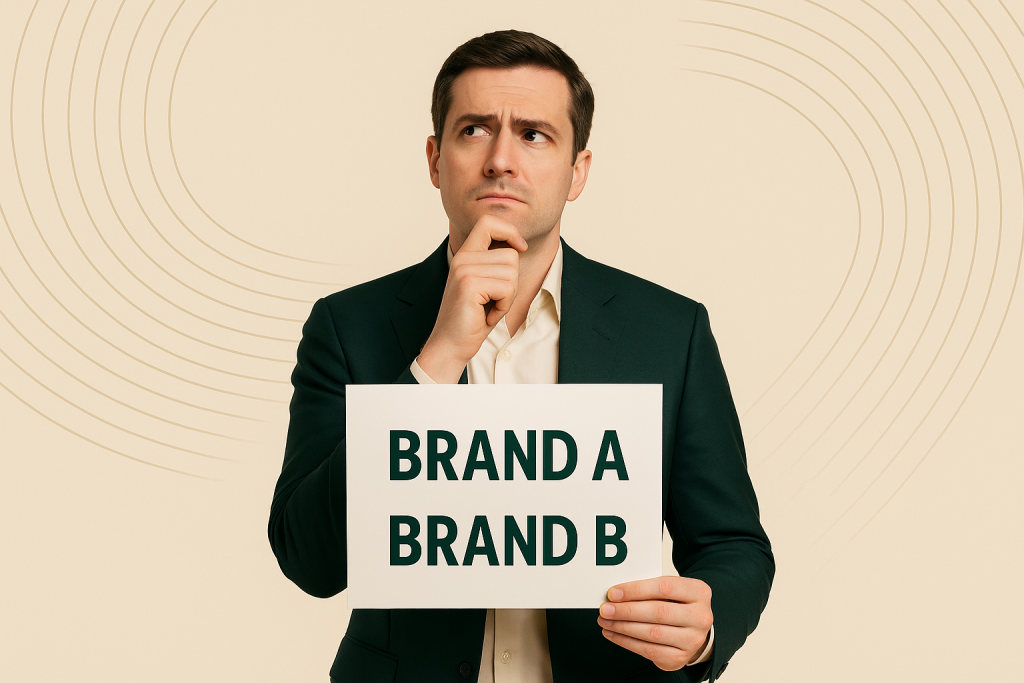
More importantly, which one feels defensible long term?
That’s the power of a media engine.
It creates leverage you can’t buy with ads.
Investors do their homework
Before most investors part with their cash, they start digging.
They’ll Google your founder’s name, check who’s talking about your brand, and see how often you’ve been mentioned in credible sources. If they find interviews, expert commentary, and coverage in respected media, they take you seriously. It signals you’ve built trust. You’ve put yourself out there. You’re not hiding behind a pitch deck.
And if they find nothing, that silence speaks volumes. Some of the smartest founders know this. They understand the power of PR.
A repeatable system for earned media, third-party validation, and traction that can’t be ignored.
And it’s not just opinion. A 2025 academic study coined the term “media memorability” as the ability for coverage to stick in the minds of the right investors.
Researchers analysed nearly 200 UK tech startups and found that distinct, well-connected media coverage significantly increased the chances of securing venture capital.
It wasn’t about being everywhere. It was about being remembered. Startups that shared unique, relevant stories tied to their wider industry stood out. Generic mentions didn’t.
Need more proof? Let’s take a look at a health & wellness brand that mastered this.
How ŌURA Used Digital PR to Become a $5B Wellness Powerhouse
ŌURA has built an organic foundation that can’t be switched off with a budget cut.
They’re not at the mercy of Meta, Google Ads, or rising CAC. Their growth isn’t dependent on a paid platform algorithm that can change overnight, and that’s exactly the kind of defensibility investors look for.
In 2024, ŌURA hit a $5.2B valuation & secured a $200M seed round, but they didn’t just do this by building a great product.
They made themselves impossible to ignore.
Since 2020, ŌURA have scaled the number of referring domains from 3.9k to 13.4K referring domains and nearly 96K backlinks, and that directly correlates with their rising organic traffic, standing strong at 2.2M monthly organic visitors, worth $290K/mo in SEO value… (crazy, right)?.
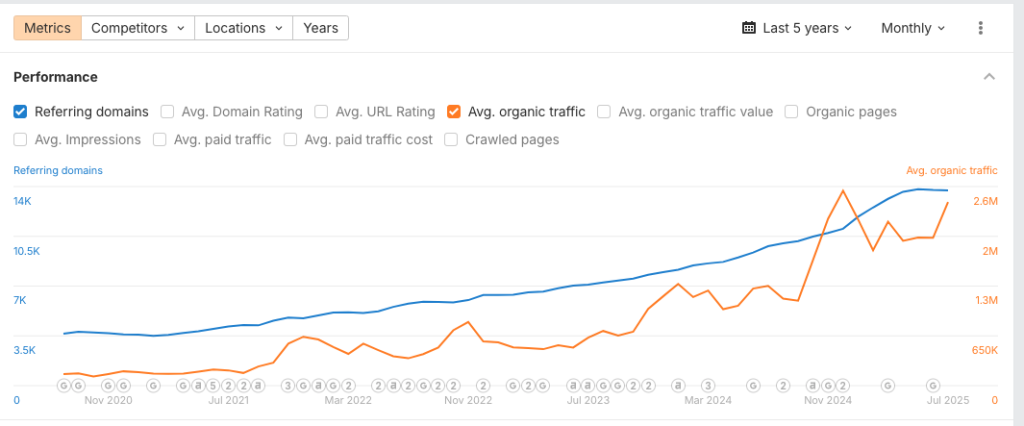
Source: Ahrefs
And it’s not just organic growth from traditional search engines. They’re now cited across Google AI overviews, ChatGPT, Perplexity, Claude and many other AI search platforms, meaning their brand is being embedded in the future of search.
ŌURA shows up in hundreds of high-authority outlets like Sleep Foundation, The Telegraph, The Knot, and No Sleepless Nights, through being proactive with product sampling, expert commentary and creating data-led stories that resonate with journalists.
And this isn’t through ads, but earned media, because they’ve positioned themselves as the go-to voice on sleep, recovery, and performance.
Every single mention adds to their authority, both algorithmically and in the minds of investors.
Thought leadership shows you understand the space
Brand mentions and links with digital PR are great, but that’s not what investors look out for. They look for expertise and thought leadership.
When a founder regularly contributes opinion pieces or commentary to relevant outlets, it shows they know their industry inside out.
It also shows they’re building a personal brand, which adds weight to investor confidence.
People back people. Especially those who are visible, credible, and clearly in tune with their market.
Milestone moments matter
When your product launches, your team expands, or you land a partnership, they’re huge wins for PR. Publishing these moments helps create a consistent, forward-moving narrative and gives investors something tangible to grasp onto. They see momentum. And momentum sells.
Good PR creates follow-on effects
Early-stage investors often rely on future fundraising rounds to see a return. If your business is already gaining media traction, it becomes easier to attract other investors later.
This is how fundraising works in practice.
Visibility leads to interest. Interest creates competition. Competition drives valuation.
It also helps in downturns
If markets wobble, deals get shaky, or budgets tighten, then brands with a strong organic foundation won’t be in trouble.
They’ve already won attention in search, in conversation, in AI answers.
PR isn’t just about pushing announcements, it’s how you shape perception over time. You tell stories, share beliefs and educate the market. You build brand equity that compounds, even when performance dips. Search engines and AI models now reward this behaviour.
They prioritise brands that get mentioned, quoted, and linked to by trusted third parties. They surface those names in AI overviews and summaries.
Not because of keywords. Because of authority.
So when the market cools, and paid growth stalls, you’re still being discovered. Not because you’ve outspent others. But because you’ve out-positioned them.
PR keeps your brand relevant, searchable, and top-of-mind, even when you’re not shouting. It builds the kind of presence that can’t be turned off with a budget cut.
How it works in practice
Health & wellness is one of the most lucrative industries for digital PR. Journalists are constantly sourcing credible experts, including nutritionists, personal trainers, sleep coaches, doctors.
In fact, they’re among the most frequently quoted experts across all media sectors. ResponseSource data shows Health attracted 6,862 media enquiries in the past year, outpacing sectors like Home & Garden and Food & Drink. While Women’s Interest & Beauty still leads with nearly 8,000 enquiries, Health remains one of the most in-demand topics for journalists.
This makes the space highly accessible for brands with legitimate voices and products.
But how exactly do you go about securing coverage (at scale)?
Here are some practical ways your health & wellness brand can earn more PR coverage:
Have samples ready
If you sell a physical product, especially in wellness, journalists will often ask to try it before coverage.
Sign up for sources such as Editorielle, Response Source, or monitor X for #journorequest. These are a goldmine for finding highly influential journalists and media publications that are on the lookout for trending products to feature in upcoming editorials.
When you respond, be direct and helpful.
Example email template:
“Hi [Name], I saw your request for wellness products. We make [product], designed to help with [problem]. It’s 100% natural, UK-made, and already used by over 10,000 customers. I’d be happy to send a sample and images today if you’re interested.”
Why this works: You’re saving them time, showing relevance, and making it easy to say yes.
Run data-driven campaigns
This doesn’t always mean commissioning a new survey, although though that can work well.
For example, instead of “70% of Brits sleep worse during heatwaves,” go stronger: “Brits lose the equivalent of 4 nights’ sleep every summer due to heatwaves, new data reveals.”
And don’t forget to leverage public data. Government health stats or Google search trends are powerful tools. Break them down regionally to create angles for both national and local media.
Example: If you’re a sleep-focused brand, use Google Trends or Google Keyword Planner to find which UK cities search most for terms like “can’t sleep,” “insomnia remedies,” or “how to fall asleep fast.”
Then turn the data into a story like: “Revealed: The UK’s most sleep-deprived cities, according to Experts.”
Pair with expert commentary on sleep health. This positions your brand as a credible authority and increases the chance of press coverage.
Be reactive
Monitor breaking news and trending topics, and offer expert commentary fast.
For example, when the NHS released new data showing a sharp rise in melatonin prescriptions for children, a sleep supplement brand could respond with: “Why kids are struggling to sleep, and what parents can do without reaching for a prescription.”
A quote from a qualified expert (e.g. the brand’s nutritionist or founder) offering practical tips and highlighting natural remedies gives journalists a timely angle with added authority.
By following these steps consistently, this can earn powerful links and brand mentions in major publications, which will compound over time and deliver organic growth.
Final thought
If you’re raising capital and ignoring PR, you’re leaving leverage on the table.
Founders who get this right don’t just pitch better, they attract inbound interest. Digital PR amplifies a solid business model and healthy financials. It gets the right people paying attention.
And sometimes, that’s what tips a “maybe” into a “yes.”